Ladakh Turns Barren Desert Into Saffron Fields in Breakthrough Agricultural Experiment
An ambitious agricultural experiment in Ladakh has successfully yielded saffron flowers on restored barren land within just 30 days.

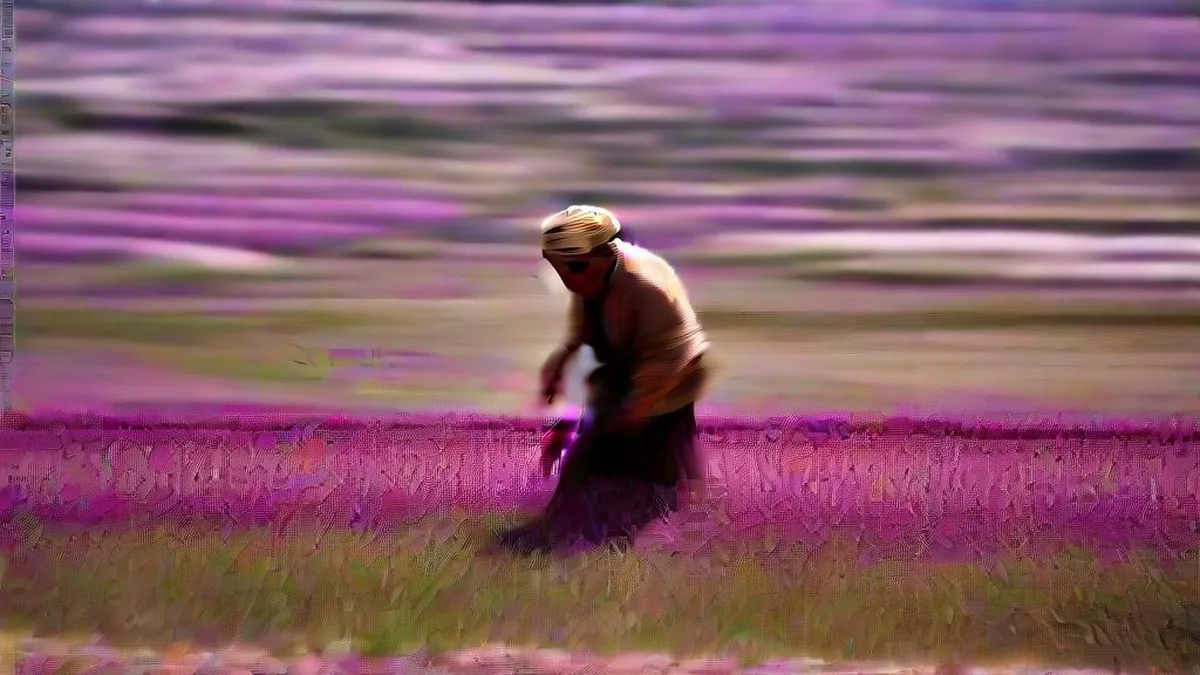
Saffron Blossoms in the Cold Desert
In a landmark agricultural breakthrough, Ladakh's high-altitude cold desert has successfully yielded its first crop of saffron in less than 30 days. The rapid flowering on a restored patch of land in Leh has defied initial expectations, outperforming the projected two-month timeline set by the Union Territory administration.
Nearly 22 grams of premium saffron have been harvested over a four-day period, according to officials. The initiative, spearheaded by Lieutenant Governor VK Saxena, covers approximately 4,000 square meters of land at Spituk Pharka. Here, approximately 90,000 premium Iranian saffron corms, weighing a total of 800 kilograms, were planted on October 1.
The experimental field has consistently produced between 20 and 25 flowers daily, culminating in a record single-day count of 72 blooms.
Unlocking High-Altitude Potential
Inspecting the thriving saffron beds, Lieutenant Governor VK Saxena hailed the development as a testament to the untapped agricultural capacity of high-altitude terrains. He noted that successful commercial saffron production could introduce entirely new economic avenues for local farmers and rural entrepreneurs.
While Jammu and Kashmir currently accounts for approximately 90 percent of India's total saffron production—centered heavily around regions like Pampore—expanding cultivation to Ladakh represents a major geographical diversification for the labor-intensive spice.
Restoration and Water Management
Beyond high-value cash crops, the underlying site transformation is tied to broader ecological restoration efforts. The land at Spituk Pharka was heavily degraded and completely unproductive before undergoing revival through Project Him Sarovar, an administrative initiative designed to conserve snowmelt and mitigate water scarcity in the region.
Ladakh receives under 100 millimeters of rainfall annually, forcing agriculture to rely heavily on glacial meltwater and newly managed irrigation networks, such as the revived Igoo-Phey canal system.
This latest milestone builds on ongoing scientific trials initiated in March 2025 by researchers from the CSIR-Indian Institute of Integrative Medicine, alongside previous diversification experiments involving high-value floriculture crops like Lilium and Gladiolus to bolster local livelihoods.
About Gaurav Sen
Senior Editorial Director & Lead Geopolitical Analyst
Senior Editorial Director and investigative correspondent covering national affairs, international relations, defense, and economic policy for Daily News 365.