S Jaishankar Slams UN 'Double Standards' on Global Protests, Highlights External Interference
External Affairs Minister S Jaishankar has sharply criticized the United Nations over apparent double standards in its responses to domestic protests across various nations.

Global Governance Under Scrutiny
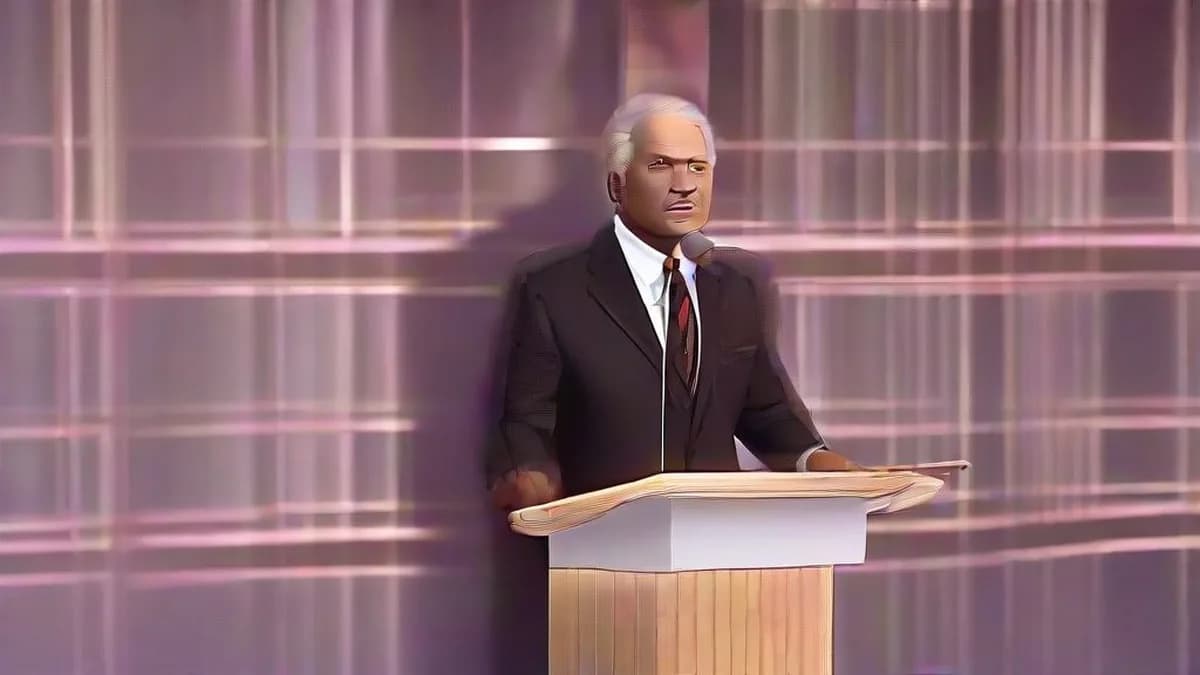
External Affairs Minister S Jaishankar has leveled sharp criticism against the United Nations, pointing to glaring inconsistencies and what he termed "double standards" in how the global body addresses domestic protests and civil unrest across different sovereign nations.
Speaking at a prominent global policy summit, Jaishankar was directly questioned regarding contrasting UN responses to recent mass demonstrations in France versus youth-led protests in India. While the UN has firmly condemned riot-related violence in European nations while urging respect for human rights, it has simultaneously expressed pointed concerns over law enforcement's handling of specific domestic demonstrations in South Asia.
Responding to whether international institutions apply different yardsticks depending on the geography of the unrest, Jaishankar stated that the answer was "pretty obvious."
The Anatomy of Borderless Politics
Expanding on his critique, India's diplomatic chief emphasized that the issue extends far beyond any single country or isolated administration. He pointed to a broader systemic pattern where domestic upheavals frequently attract external orchestration.
"That is a bigger issue because you get into what the UN is, what positions they take, and so forth," Jaishankar remarked during the session. "Look, let's be straightforward about it... This is not a comment specific to India, the Indian subcontinent, or France."
Highlighting the mechanics of modern geopolitical leverage, he warned that international actors routinely exploit local dissent as instruments of strategic influence.
"We have seen that in many cases, when these moments occur, there is external encouragement and external support. There is a set of actors who see this as a tool of influence to advance their agenda. It is not a secret—even those who do it openly admit to it; they are not hiding it."
A Transformed Global Environment
Jaishankar argued that contemporary geopolitical volatility cannot be reduced to simple administrative failures or bilateral disputes. Instead, he attributed the rising tide of global friction to profound structural transformations over the past decade and a half.
Attributing the current turbulence to the advent of "borderless politics," the minister noted that rapid technological proliferation and deep economic globalization have exponentially expanded the capacity for external actors to intervene in sovereign domestic affairs.
"As the world changed, many countries and societies experienced significant psychological friction," Jaishankar explained. "With the rise of borderless politics, the ability to intervene and interfere grew as technology spread and the global economy became deeply integrated. Consequently, these drivers of turbulence and volatility have steadily compounded."
The remarks arrive amid intensifying civil unrest globally, underscored by intense street clashes in major European cities that have resulted in thousands of arrests, widespread property damage, and severe challenges for local law enforcement agencies.
About Gaurav Sen
Senior Editorial Director & Lead Geopolitical Analyst
Senior Editorial Director and investigative correspondent covering national affairs, international relations, defense, and economic policy for Daily News 365.